
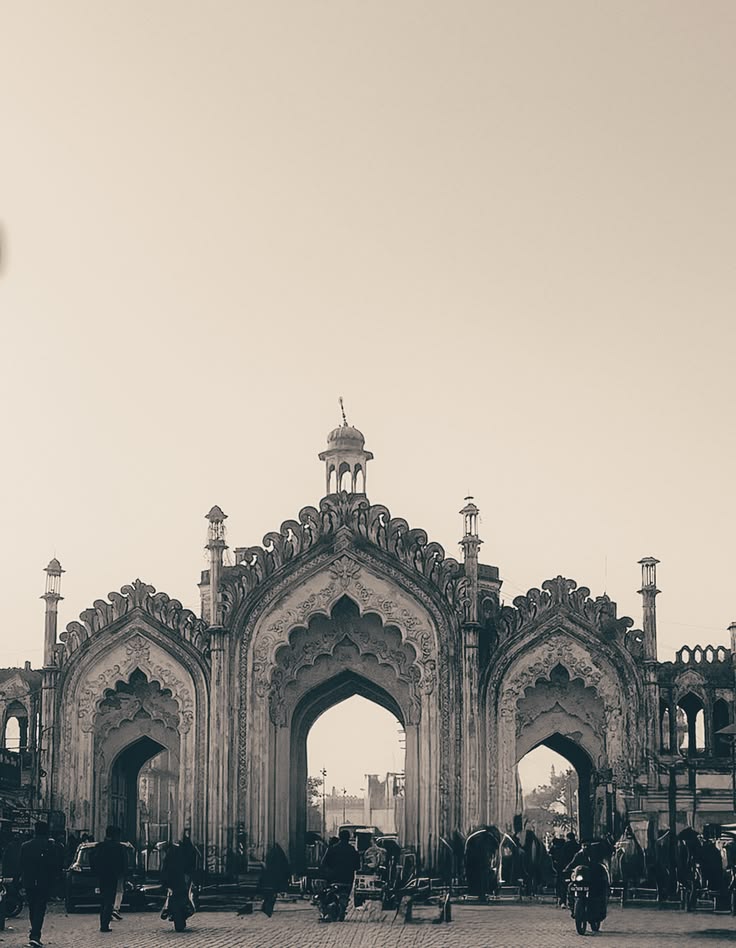
There are some crafts that belong so naturally to a place that the two become almost inseparable. Chikankari and Lucknow are one such pairing. Ask about the delicate embroidery, and the conversation quickly turns towards the City of Nawabs. Ask about Lucknow’s traditional crafts, and Chikankari is among the first that comes to mind.
Yet, the story of how Chikankari became so closely associated with Lucknow is more than a simple tale of a craft arriving in a city. It is a story shaped by cultural exchange, royal patronage, skilled artisans, changing fashion and generations of patient craftsmanship. Over time, Lucknow provided the environment in which this delicate form of embroidery could flourish, evolve and eventually become one of India’s most recognisable textile traditions.
The Early Story of Chikankari
The exact origins of Chikankari are not entirely settled, which is part of what makes its history so fascinating. One of the most widely accepted accounts connects the craft with Persian influence and the Mughal period. According to the Indian government’s tourism portal, the technique is traditionally believed to have been introduced by Mughal empress Nur Jahan in the 17th century. Another popular legend tells of a traveller who taught the craft to a local villager after receiving water and hospitality. While the legend remains part of the cultural storytelling surrounding Chikankari, the association with Mughal and Persian artistic traditions is more commonly cited in historical accounts.
The word itself is associated with the Persian tradition of needlework, reflecting the wider cultural influences that shaped the craft. In its earlier form, Chikankari was particularly known for delicate white embroidery on fine fabrics, creating a subtle interplay of texture and light. This understated quality would eventually become one of the defining characteristics of the craft.
But for Chikankari to become the art form we recognise today, it needed more than an origin story. It needed a place where skilled hands, artistic traditions and patronage could come together.
That place was Lucknow.
Why Lucknow Became the Perfect Home
A City Shaped by Art and Culture
Lucknow has long been associated with a distinctive cultural identity. Under the Nawabs of Awadh, the city developed a reputation for refined arts, music, literature, architecture, cuisine and the celebrated traditions of tehzeeb and adab. The city’s cultural landscape was influenced by Mughal, Persian and later British traditions, creating an environment where different artistic expressions could meet and evolve.
In such a setting, an intricate craft like Chikankari had the opportunity to move beyond being a specialised technique and become part of the city’s cultural fabric.
Royal and aristocratic patronage also played an important role in the development of traditional arts across the region. Crafts that required time, precision and specialised skill benefited from communities that valued handmade work and supported artisans. Chikankari’s delicate appearance and intricate workmanship suited the refined aesthetic associated with Lucknow’s cultural life.
Over generations, the craft became increasingly rooted in the city and its surrounding communities.
From Courtly Craft to Livelihood
Like many traditional crafts, Chikankari did not remain confined to elite circles forever. As the craft developed, it became an important source of livelihood for artisan communities and grew into a significant commercial activity.
The Government of Uttar Pradesh describes Lucknow Chikankari as a delicate embroidery tradition that evolved from a courtly craft into an important commercial activity. Its appeal lies in the precision and fineness of the workmanship, with traditional patterns including techniques such as muree, lerchi, keelkangan and bakhia.
This transition was crucial. It allowed the knowledge of Chikankari to travel through generations, not simply as an artistic tradition, but as a skilled occupation sustained by countless craftspeople.
The craft’s identity became increasingly connected with Lucknow, while its reach extended beyond the city into neighbouring areas. Official Uttar Pradesh sources describe Lucknow as the centre of the craft, with Chikankari later spreading to surrounding districts.
The Beauty Lies in the Detail
One of the reasons Chikankari has endured for so long is its remarkable subtlety.
Unlike embroidery that relies heavily on bold colours, elaborate embellishment or dramatic ornamentation, traditional Chikankari often finds its beauty in restraint. The design emerges through fine stitches, delicate textures and carefully arranged motifs.
The craft includes a wide variety of stitching techniques. These can create flat patterns, raised textures and openwork effects resembling a delicate net. According to Incredible India, the tradition incorporates around 36 different stitching techniques, with flat, embossed and jaali work among its principal forms. Floral motifs, creepers and vines are particularly characteristic, reflecting the Persian influence on the art.
This attention to detail is what gives Chikankari its distinctive character. A garment may appear simple at first glance, yet a closer look reveals layers of craftsmanship. The embroidery is not merely decoration placed upon fabric. It becomes part of the fabric’s personality.
That quiet complexity has helped the craft remain relevant even as fashion has changed.
From White-on-White to a Modern Wardrobe
The Chikankari associated with its early traditions was closely linked with white thread and light-coloured fabrics. Over time, however, the craft adapted to changing tastes and materials.
Today, Chikankari can be found on a much broader range of fabrics and garments. While traditional white embroidery remains deeply admired, contemporary interpretations use different colours, silhouettes and textiles. Kurtas, kurtis, sarees, dupattas and other forms of clothing now carry Chikankari-inspired craftsmanship, allowing the tradition to reach a much wider audience. Official government sources recognise Lucknow as a major centre for Chikankari products, including garments and home textiles.
This evolution is an important part of the craft’s story. Tradition does not always survive by remaining unchanged. Sometimes, it survives because it knows how to adapt without losing the essence that made it special in the first place.
The fundamental appeal of Chikankari remains its craftsmanship. Whether presented in a traditional or contemporary form, the intricate embroidery continues to connect the wearer with a long artistic heritage.
More Than an Embroidery Technique
Today, Chikankari is often described simply as a style of embroidery. But in Lucknow, it represents something much broader.
It reflects the city’s history of cultural exchange. It carries traces of Persian influence, Mughal-era traditions and the artistic environment of Awadh. It represents the knowledge passed from one generation of artisans to another. It also demonstrates how a craft can become economically meaningful while retaining its cultural identity.
Lucknow’s connection with Chikankari has become so strong that the craft is now an essential part of the city’s identity. The Government of India’s One District One Product portal lists Lucknow Chikan Craft among the city’s recognised traditional products and identifies it with the region’s textile heritage.
Walk through the city’s traditional markets and the relationship becomes visible. Chikankari is not preserved only in museums or history books. It continues to exist in everyday clothing, in workshops, in markets and in the hands of artisans who keep the craft alive.
That is perhaps the greatest reason Chikankari found its home in Lucknow. The city did not simply receive the craft. Over time, it gave the craft a cultural setting in which it could grow, develop and become part of everyday life.
A Tradition That Continues to Evolve
The history of Chikankari is ultimately a reminder that craftsmanship can outlive the circumstances in which it began. What may have once been associated with royal courts and refined surroundings has become accessible to people across generations and regions.
Its journey from traditional hand embroidery to contemporary fashion demonstrates the enduring power of thoughtful design. Trends may change quickly, but craftsmanship built on patience, skill and cultural meaning has a different kind of longevity.
Perhaps this is why Chikankari continues to feel relevant today. It carries history without feeling trapped in the past. It can be delicate without being fragile, traditional without being outdated and elegant without demanding attention.
The story of Chikankari and Lucknow is therefore not simply about where an embroidery technique came from. It is about how a craft and a city shaped each other over time, until the identity of one became inseparable from the other.
For Daur Clothing, this enduring connection is a reminder of why timeless style continues to matter. The philosophy is simple: clothing should bring together the beauty of tradition, the ease of everyday comfort, dependable quality and affordability, allowing thoughtful craftsmanship to become part of modern life rather than something reserved only for special occasions.
In the end, the true legacy of Chikankari lies not only in the stitches themselves, but in the idea that beautiful things can be made with patience, worn with ease and cherished across time.