
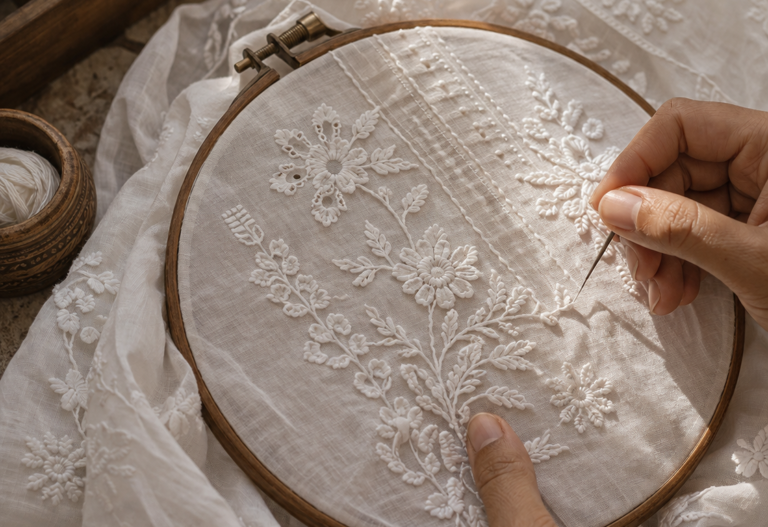
There is something quietly captivating about Chikankari. Unlike embroidery that demands attention through bold colours or elaborate embellishments, Chikankari draws you closer through subtle details. A delicate floral motif, a fine line of thread, or a carefully placed stitch can transform a simple piece of fabric into something deeply expressive.
Today, Chikankari is admired across India and beyond as an elegant form of ethnic wear. It appears on kurtis, kurtas, suits, sarees and contemporary silhouettes, making it a versatile part of modern wardrobes. Yet behind every embroidered piece lies a centuries-old craft shaped by skilled hands, patience and tradition.
Understanding Chikankari is therefore about more than knowing what the word means. It is about appreciating the artistry behind the embroidery, the techniques that give it character, and the cultural heritage that continues to influence Indian fashion today.
What Is Chikankari?
Chikankari is a traditional form of hand embroidery associated primarily with Lucknow, Uttar Pradesh. The word is commonly understood to refer to delicate embroidery created with thread on fabric, although the craft itself encompasses a rich variety of stitches and patterns.
Traditionally, white thread was worked onto lightweight fabrics to create intricate motifs inspired by nature. Flowers, leaves, vines and other organic forms remain some of the most recognisable elements of Chikankari embroidery.
Over time, the craft has evolved. While traditional white-on-white embroidery remains iconic, contemporary Chikankari clothing can be found in a wide range of colours and fabrics. The embroidery may be subtle or more prominent, depending on the design and the desired aesthetic.
What remains consistent is the sense of delicacy and craftsmanship that defines the art.
The History and Heritage of Chikankari
Chikankari is deeply connected to the cultural identity of Lucknow and the wider Awadh region. Its history is often traced back several centuries, with different accounts attributing its origins to influences from Persia and the Mughal period.
The craft flourished under royal and aristocratic patronage, gradually becoming an important part of the region’s textile traditions. Lucknow eventually emerged as one of the most important centres for Chikankari embroidery, where generations of artisans continued to refine the techniques and pass their knowledge from one generation to the next.
Historically, Chikankari was associated with fine muslin and other lightweight fabrics that allowed the embroidery to appear delicate and almost ethereal. The combination of soft fabric and intricate threadwork made the craft particularly suited to warm climates.
As fashion changed, so did Chikankari. The embroidery began appearing on new fabrics, silhouettes and colours, allowing it to remain relevant while retaining its traditional identity.
This ability to evolve without losing its essence is one of the reasons Chikankari continues to hold such a special place in Indian fashion.
The Art Behind Chikankari Embroidery
One of the most fascinating aspects of Chikankari is that it is not defined by a single stitch. Instead, it is a collection of embroidery techniques, each contributing a distinct texture and visual effect.
Tepchi
Tepchi is a simple running stitch often used to create outlines and linear patterns. It may appear understated, but it forms an important foundation for many Chikankari designs.
Bakhiya
Bakhiya, sometimes referred to as shadow work, is one of the most recognisable techniques associated with Chikankari. The embroidery creates a soft, shadow-like effect on the fabric, giving motifs depth without making them appear heavy.
Jaali
Jaali is particularly admired for its delicate, lace-like appearance. The technique creates an openwork effect that resembles a fine mesh while maintaining the integrity of the fabric. It requires considerable skill and precision.
Phanda and Murri
Phanda and Murri are knot-based stitches often used to create small, raised details. They are frequently incorporated into floral and botanical motifs, adding subtle texture to the overall design.
Keel Kangan
Keel Kangan is another traditional technique that can be used to create decorative details within Chikankari motifs. Like many forms of hand embroidery, its visual impact depends heavily on the artisan’s precision and consistency.
These techniques can be used individually or combined to create intricate compositions. The result is embroidery that feels detailed without appearing overwhelming.
Why Chikankari Motifs Are So Closely Connected to Nature
Look closely at traditional Chikankari and you will notice a recurring theme: nature.
Flowers, leaves, vines and botanical patterns form the foundation of many designs. This connection gives Chikankari its graceful and organic character. Rather than relying solely on geometric repetition or elaborate ornamentation, the embroidery often follows the natural movement of stems and petals.
Floral motifs also allow artisans to create a sense of rhythm across the fabric. A single flower may become part of a larger vine, while smaller leaves and buds fill the spaces around it.
This is one reason Chikankari can feel both traditional and contemporary. Nature-inspired designs rarely appear tied to a particular season or passing trend. Their simplicity allows them to remain visually relevant over time.
Is Chikankari Always Hand Embroidered?
This is an important question, particularly for anyone looking to understand Chikankari clothing.
Traditional Chikankari is a hand embroidery craft, and authentic handwork reflects the skill and individuality of the artisan. However, the popularity of Chikankari has led to the development of machine-made interpretations as well.
Machine embroidery can reproduce certain visual elements of traditional Chikankari more quickly and consistently. It also makes the aesthetic accessible at different price points.
Hand embroidery, however, carries a distinct character. Slight variations in stitches, texture and placement are often part of what makes handmade work unique. The time, patience and craftsmanship involved also contribute to its cultural and artistic value.
When choosing Chikankari clothing, understanding this distinction can help you appreciate what goes into the piece you are buying and make a more informed decision based on your preferences and budget.
Chikankari in Modern Indian Fashion
Although its roots are firmly traditional, Chikankari has adapted beautifully to contemporary fashion.
Today, you can find Chikankari embroidery on everything from classic kurtas and chikankari kurtis to coordinated suits and modern fusion outfits. The embroidery may be paired with soft pastels for a subtle look or richer colours for a more expressive appearance.
This versatility is part of its enduring appeal. A simple Chikankari kurti can work for everyday dressing, while a more intricately embroidered outfit can be styled for celebrations and special occasions.
The craft also works particularly well with modern wardrobes because it does not require excessive styling. The embroidery itself brings character to the garment, allowing accessories and footwear to remain relatively understated.
How to Appreciate the Craft Behind Every Piece
When looking at Chikankari, it is worth taking a moment to notice the details.
Look at the consistency of the stitches. Observe how the motifs are arranged across the fabric. Notice the balance between embroidered and unembroidered areas. Pay attention to the texture created by different techniques.
These details reveal the difference between simply wearing embroidery and appreciating the craft behind it.
Chikankari also reminds us that clothing can carry stories beyond fashion. Every motif, stitch and design reflects a tradition that has continued to evolve through changing generations and tastes.
In a world where trends move quickly, this connection to craftsmanship gives Chikankari a special sense of permanence.
The Timeless Appeal of Chikankari
The enduring popularity of Chikankari lies in its ability to balance tradition with simplicity. It is detailed without being excessive, elegant without being restrictive, and rooted in heritage while remaining adaptable to contemporary life.
Whether you are discovering Chikankari for the first time or already have a favourite piece in your wardrobe, understanding the art behind the embroidery adds another dimension to the experience. What may initially look like a delicate pattern is, in reality, the result of technique, patience and cultural continuity.
Ultimately, Chikankari is not simply an embroidery style. It is a reminder that true craftsmanship does not need to be loud to be noticed. Sometimes, the finest details are the ones that stay with us the longest.
Chikankari continues to find its place in modern wardrobes because it brings together heritage and everyday wearability in a way that feels natural. At Daur Clothing, this understanding reflects a broader philosophy of choosing pieces that offer timeless style, everyday comfort, quality and affordability, allowing traditional influences to become part of the way women dress today without feeling out of place.
When fashion is thoughtfully chosen and beautifully made, it becomes more than something we wear. It becomes part of our story, carried forward one timeless piece at a time.