
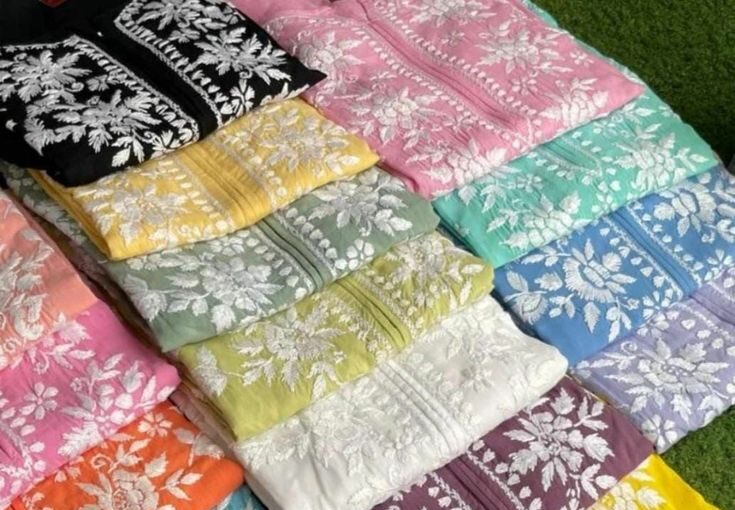
Fashion has never moved faster. New trends appear on social media overnight, collections change with every season, and clothing is often designed to be replaced almost as quickly as it is bought. In this landscape of constant change, it may seem surprising that an age-old craft such as Chikankari continues to hold such a strong place in modern wardrobes.
Yet, perhaps that is precisely why it remains relevant.
Chikankari represents a different approach to fashion. It is rooted in craftsmanship, subtle beauty, versatility, and an appreciation for details that do not depend on fleeting trends. While fast fashion often celebrates what is new, Chikankari reminds us of the value of what can remain beautiful over time.
The Timeless Appeal of Chikankari
Chikankari is more than decorative embroidery. It is a traditional form of handwork associated with Lucknow, known for its delicate patterns and intricate needlework. Floral motifs, fine stitches, and graceful detailing give Chikankari garments a distinctive character that feels both elegant and understated.
Its appeal lies in its ability to evolve without losing its identity.
Over the years, Chikankari has found its way into different styles of clothing, from traditional kurtas and suits to contemporary dresses, co-ord sets, and everyday kurtis. The silhouettes may change, but the essence of the craft remains recognisable.
This balance between tradition and modernity is one of the reasons Chikankari continues to appeal to new generations. It does not require a wardrobe built around trends. Instead, it offers a sense of style that can adapt to changing tastes while retaining its cultural connection.
A Craft That Stands Apart from Fast Fashion
Fast fashion has made clothing more accessible and trends more immediate. However, its emphasis on speed and constant consumption has also encouraged a culture in which garments can feel temporary.
Chikankari offers an alternative perspective.
The craft draws attention to the work behind a garment. Every embroidered detail represents time, skill, and patience. Even when produced in contemporary forms, the visual language of Chikankari carries a sense of craftsmanship that is difficult to replicate through mass-produced prints alone.
This does not mean that every Chikankari garment is automatically superior in quality or that traditional clothing exists outside the realities of modern fashion. Fabric, construction, finishing, and workmanship still matter. However, the craft itself encourages us to look beyond the speed at which a garment reaches us and appreciate the detail that gives it character.
In a world where fashion can sometimes feel disposable, that sense of permanence has real value.
Versatility Makes Chikankari Easy to Wear
One of the strongest reasons for the enduring popularity of Chikankari is its versatility.
A well-designed Chikankari kurti can work across a variety of settings. Paired with trousers, it can create a polished everyday look. Worn with traditional bottoms, it can feel more rooted in Indian ethnic wear. Styled with simple jewellery and comfortable footwear, it can transition effortlessly from casual outings to relaxed social occasions.
This adaptability makes Chikankari particularly relevant to modern wardrobes, where people often look for clothing that can serve more than one purpose.
The same principle applies to colour. While white and soft neutrals remain closely associated with the craft, contemporary Chikankari clothing is available in a wide range of shades. Pastels can create a delicate, understated appearance, while deeper colours offer a more expressive interpretation of the traditional embroidery.
The result is clothing that can feel personal rather than prescriptive.
The Return to Thoughtful Dressing
As conversations around sustainability and responsible consumption become more prominent, many people are beginning to reconsider how they shop for clothes.
The answer is not necessarily to stop buying new clothing altogether. Instead, it can be about making more thoughtful choices. Choosing garments that are comfortable, versatile, and likely to remain relevant can help create a wardrobe that feels more considered.
Chikankari naturally fits into this way of thinking.
Its appeal is not dependent entirely on what happens to be trending at a particular moment. A beautifully embroidered kurti can remain part of a wardrobe for years, styled differently as personal preferences evolve.
This is where timeless fashion becomes more than a visual concept. It becomes a practical approach to dressing.
When a garment can be worn repeatedly, combined with different pieces, and adapted to different occasions, it earns a more meaningful place in the wardrobe. Chikankari’s understated elegance makes this possible without demanding excessive styling or constant reinvention.
Tradition Meets the Modern Wardrobe
The relevance of Chikankari today also comes from its ability to exist comfortably between generations.
For one person, it may represent a connection to Indian craftsmanship and cultural heritage. For another, it may simply be an elegant and comfortable choice for everyday dressing. For younger wearers, it can become a way to explore traditional clothing through silhouettes and styling that feel contemporary.
This flexibility allows the craft to remain alive rather than becoming confined to the past.
Modern fashion does not have to reject tradition to be relevant. In fact, some of the most enduring styles are those that allow heritage to evolve naturally. Chikankari demonstrates how traditional craftsmanship can coexist with modern preferences without losing its original character.
The embroidery may be centuries old, but the way people wear it continues to change.
Why Slow Beauty Still Matters
There is something inherently appealing about clothing that does not ask to be noticed immediately.
Fast fashion often relies on novelty. Chikankari, by contrast, draws attention through detail. Its beauty is often discovered gradually, through the texture of the embroidery, the rhythm of its motifs, and the way the fabric moves when worn.
That quieter form of beauty has become increasingly meaningful in an environment saturated with visual noise.
It also reflects a broader shift in how people think about personal style. Instead of dressing only to follow trends, many are looking for pieces that feel authentic to who they are. Comfort, quality, cultural identity, and individuality are becoming just as important as staying current.
Chikankari speaks naturally to these priorities.
It allows the wearer to embrace Indian craftsmanship while expressing personal taste. It can be traditional or contemporary, minimal or expressive, understated or striking. Its strength lies in this freedom.
The Future of Chikankari
Chikankari’s future will depend on its ability to remain connected to its roots while responding to the realities of modern fashion.
That means preserving the value of craftsmanship while exploring contemporary fabrics, silhouettes, colours, and ways of wearing the embroidery. It also means encouraging consumers to understand the work and skill behind the garments they choose.
The continued relevance of Chikankari is not simply about preserving a traditional craft for the sake of nostalgia. It is about recognising that certain ideas remain valuable regardless of how quickly fashion changes.
Craftsmanship matters. Comfort matters. Versatility matters. And clothing that continues to feel relevant beyond a single season has a place in every generation’s wardrobe.
Conclusion
In the age of fast fashion, Chikankari remains relevant because it offers something that trends cannot easily replace: a connection to craftsmanship, culture, and timeless personal style. Its ability to adapt to contemporary wardrobes while retaining its distinctive identity makes it more than a traditional embroidery technique. It is a reminder that fashion can be beautiful without being fleeting, and that the most meaningful pieces are often those we continue to reach for long after the latest trend has passed.
At Daur Clothing, this belief is reflected in a philosophy centred on timeless style, everyday comfort, quality, and affordability. Chikankari embodies that approach in its own unique way, offering clothing that feels rooted yet relevant, elegant yet effortless. Ultimately, the enduring value of fashion lies not in how quickly it changes, but in how beautifully it stays with us.