
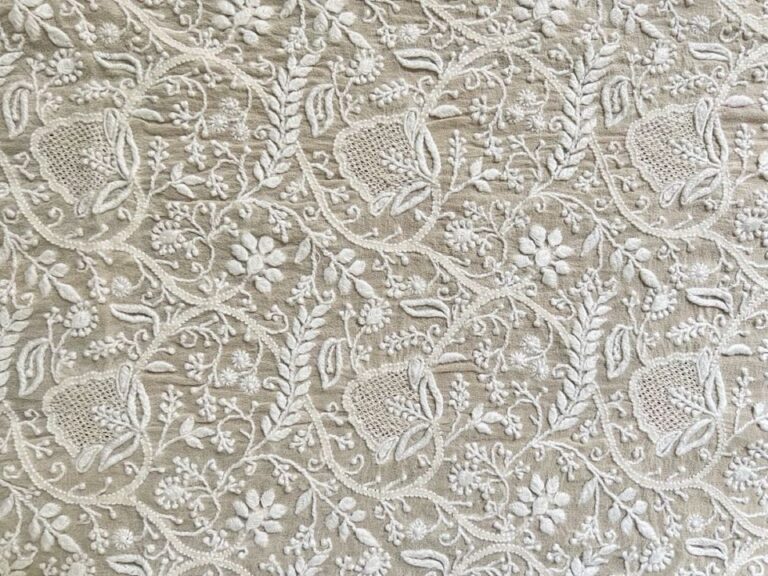
Few forms of Indian embroidery carry the quiet elegance of Chikankari. Delicate, intricate and remarkably versatile, this traditional craft has found a lasting place in Indian wardrobes, evolving gracefully from a regional art form into a style embraced across generations.
From flowing kurtas and elegant kurtis to graceful suits and contemporary separates, Chikankari clothing continues to appeal to women who appreciate the beauty of craftsmanship without compromising on comfort. Its charm lies not only in the embroidery itself, but in the sense of history, patience and artistry woven into every piece.
But what makes Chikankari so enduring? To understand its appeal, it is worth looking beyond the finished garment and exploring the craft, techniques and thoughtful design that have allowed it to remain relevant in modern Indian fashion.
What Is Chikankari?
Chikankari is a traditional form of hand embroidery associated primarily with Lucknow, Uttar Pradesh. The word is believed to have Persian origins, with the craft traditionally involving delicate threadwork created on fabric by skilled artisans.
While white-on-white embroidery is perhaps the most recognisable expression of Chikankari, the craft has evolved significantly over time. Today, Chikankari clothing can be found in a variety of colours, fabrics and silhouettes, making it suitable for both traditional and contemporary wardrobes.
The beauty of Chikankari lies in its subtlety. Rather than relying on heavy embellishment, it creates visual interest through fine stitches, floral motifs and intricate patterns. The result is clothing that often feels graceful and understated, yet detailed enough to make an impression.
The Craft Behind Chikankari Clothing
The appeal of authentic Chikankari comes from the skill and patience involved in creating it. Traditionally, the process begins with a design that is transferred onto the fabric. Artisans then use different embroidery techniques to bring the pattern to life.
Depending on the design, a garment may feature a combination of stitches, each contributing a different texture and character to the final piece.
Traditional Stitches and Techniques
Some of the stitches associated with Chikankari include the delicate bakhiya, often known for its fine shadow work, and jaali, a technique that creates an intricate, net-like appearance. Other stitches add texture, definition or small decorative details to floral and geometric motifs.
The embroidery is often inspired by nature. Flowers, leaves, vines and paisley-like forms are recurring elements, creating patterns that feel organic and timeless.
The intricacy of the work can vary considerably. Some garments feature sparse embroidery that allows the fabric to remain the focus, while others showcase elaborate patterns covering much of the surface.
This variation is one reason Chikankari clothing can adapt so easily to different tastes. There is something for those who prefer understated elegance as well as for those who enjoy more detailed traditional designs.
The Evolution of Chikankari in Indian Fashion
Chikankari has a strong connection to Indian heritage, but its journey has never been limited to the past. Like many enduring crafts, it has evolved with changing lifestyles and fashion preferences.
Traditional Chikankari garments were often associated with classic Indian silhouettes. Today, the embroidery appears on everything from relaxed kurtis and coordinated suits to contemporary tops and fusion outfits.
This evolution has helped Chikankari remain relevant to modern women. The craft can be appreciated in a traditional setting, but it can also be styled in a way that feels fresh and effortless.
The growing popularity of Chikankari fashion also reflects a broader appreciation for Indian craftsmanship. As consumers become more interested in the stories behind the clothes they wear, traditional textile arts are being rediscovered and celebrated in new ways.
Why Chikankari Clothing Remains Timeless
Fashion trends change quickly. Colours come and go, silhouettes evolve and seasonal styles constantly compete for attention. Yet certain garments remain relevant because their appeal is not dependent on a particular trend.
Chikankari is one such example.
Its timelessness comes partly from its visual language. Floral motifs, delicate embroidery and graceful silhouettes have an inherent softness that does not feel tied to one particular era. A well-designed Chikankari kurti can feel equally appropriate today as it would have years ago.
There is also a sense of versatility that makes the craft especially appealing.
A simple Chikankari kurti can be worn with trousers or jeans for an easy everyday look. The same embroidery can be styled with traditional bottoms and jewellery for a more festive appearance. This ability to move between occasions makes Chikankari clothing a practical addition to a modern wardrobe.
How to Style Chikankari Clothing
One of the easiest ways to appreciate the versatility of Chikankari is through styling. The right combination can completely change the character of an outfit.
For Everyday Wear
For a relaxed daytime look, pair a Chikankari kurti with straight trousers, palazzos or simple cotton bottoms. Neutral footwear and minimal accessories keep the focus on the embroidery while maintaining an effortless appearance.
Lighter fabrics and subtle patterns are particularly well suited to everyday dressing, especially in warmer weather.
For Work and Smart Casual Occasions
Chikankari can also work beautifully in a professional or polished setting. Choose a structured kurti in a refined colour and pair it with tailored trousers or understated ethnic bottoms.
Keep accessories simple and choose clean silhouettes. The result is an outfit that feels elegant without appearing overly dressed.
For Festive Occasions
For celebrations, Chikankari can be elevated with statement jewellery, embellished footwear or a richly coloured dupatta. Depending on the embroidery and fabric, a Chikankari suit or detailed kurta can create a graceful festive look without relying on excessive embellishment.
The key is balance. Since the embroidery already provides visual detail, accessories should complement rather than compete with it.
Choosing the Right Chikankari Clothing
When selecting Chikankari clothing, the embroidery is only one part of the decision. Fabric, fit, colour and construction all influence how comfortable and versatile a garment will be.
Consider where you intend to wear the piece. A lightweight kurti may be ideal for everyday use, while a more detailed design may be better suited to occasions and celebrations.
Fabric is equally important. Cotton can be a comfortable choice for warm weather, while rayon offers a soft drape and an easy-to-wear feel. The right fabric depends on the season, occasion and personal preference.
It is also worth considering the overall design. A timeless silhouette is often more versatile than a heavily trend-driven one. When choosing carefully, a Chikankari garment can become a piece that is worn repeatedly rather than reserved for a single occasion.
Caring for Chikankari Clothing
Delicate embroidery deserves thoughtful care. Always check the garment’s care instructions before washing, as the appropriate method can vary depending on the fabric and embroidery.
When possible, gentle washing methods and mild detergents can help preserve both the fabric and the intricate threadwork. Avoid harsh treatment that may weaken the embroidery or affect the colour.
Drying the garment carefully and storing it properly can also help maintain its appearance. Folding delicate pieces neatly and avoiding unnecessary friction can reduce wear over time.
Good care does more than protect a garment. It allows the craftsmanship to remain part of your wardrobe for longer, preserving the beauty and character that make Chikankari so special.
The Enduring Appeal of Indian Craftsmanship
The story of Chikankari is ultimately about more than fashion. It is a reminder of the value of craftsmanship in a world increasingly shaped by speed and mass production.
Every embroidered motif represents time, skill and attention to detail. When traditional techniques are incorporated into contemporary clothing, they create a connection between heritage and modern life.
That is perhaps why Chikankari continues to resonate so strongly. It offers a way to embrace Indian craftsmanship without feeling restricted by tradition. It allows heritage to be worn naturally, whether through a simple everyday kurti or a more elaborate outfit for a special occasion.
In a changing fashion landscape, that balance is rare. Chikankari manages to honour where it comes from while continuing to evolve with the women who wear it.
Conclusion
Chikankari clothing remains a beautiful expression of Indian craftsmanship, combining delicate artistry with the ease and versatility that modern wardrobes demand. From its intricate embroidery and nature-inspired motifs to its ability to adapt across occasions, the craft has earned its place as a timeless part of Indian fashion. Choosing thoughtfully designed pieces, caring for them well and styling them in ways that suit your lifestyle allows the beauty of Chikankari to extend far beyond a passing trend.
At Daur Clothing, this enduring approach to fashion reflects a philosophy centred on timeless style, everyday comfort, quality and affordability. Chikankari is not simply about wearing something traditional. It is about choosing pieces that feel beautiful today, remain relevant tomorrow and become a natural part of the way you dress. The best fashion is not always the loudest, but the kind you return to, wear often and cherish for years.